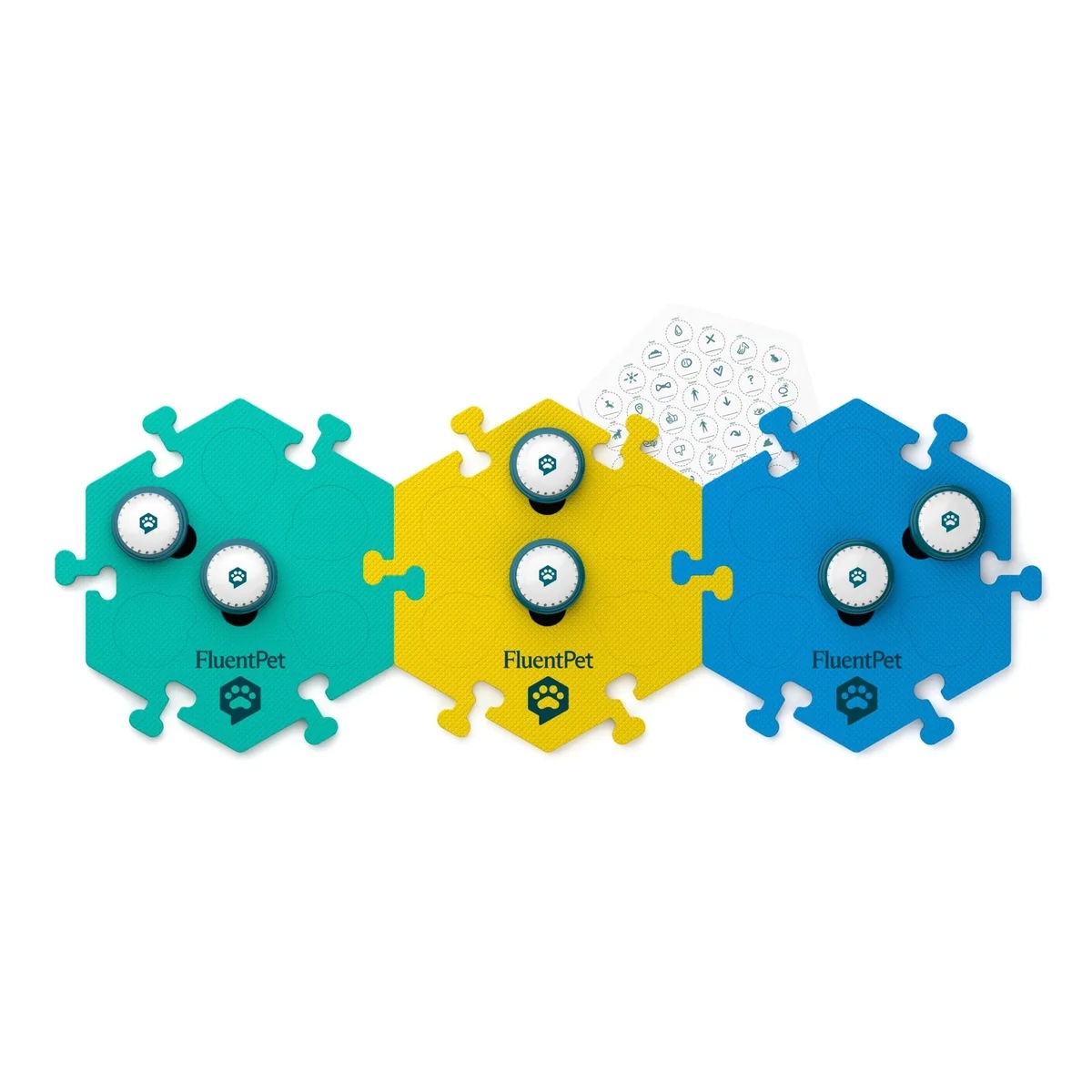
As daylight saving time ends November 1, FluentPet highlights how communication buttons help dogs and cats express their needs when familiar routines change.
SAN DIEGO, CA, UNITED STATES, October 27, 2026 /EINPresswire.com/ — When daylight saving time ends Sunday, November 1, millions of Americans will gain an extra hour of sleep. For dogs and cats accustomed to specific feeding times, walks and daily activities, however, the one-hour shift can disrupt established routines.
FluentPet (https://fluent.pet/), a pioneer in communication buttons that help dogs and cats “talk,” is highlighting how its technology gives animals another way to express their needs when familiar schedules change.
Dogs and cats develop expectations around daily activities, including when they eat, go outside, play and sleep. When clocks fall back, those expectations don’t automatically change. A dog accustomed to breakfast at 7 a.m. may still expect food when the clock reads 6 a.m. A cat accustomed to morning playtime may begin seeking attention before its person wakes up.
For dogs and cats trained to use FluentPet communication buttons, these moments offer opportunities to communicate requests through recorded words rather than relying exclusively on barking, meowing or scratching.
“Dogs and cats don’t understand why we’ve suddenly changed the clocks, but they certainly recognize when their routines change,” said Leo Trottier, Founder and CEO of FluentPet. “Through Augmentative Interspecies Communication, or AIC, we’re giving animals a way to communicate their needs and desires using customizable sound buttons. Instead of guessing why your dog is waiting by the door or your cat is demanding attention, you may hear them press ‘Outside,’ ‘Food’ or ‘Play.’ When routines change, that additional form of communication can help humans better understand what their animals are trying to tell them.”
What Dogs and Cats Might Communicate When the Clocks Change:
FluentPet’s recordable buttons allow dogs and cats to associate words with familiar activities, objects and requests. As daylight saving time ends, trained learners may use familiar words to communicate their expectations.
“Food” or “Eat”: When breakfast or dinner arrives later than expected, a learner may press a food-related button to request a meal.
“Outside”: Dogs accustomed to morning walks or bathroom breaks may request to go outside at their usual time, even when the clock indicates otherwise.
“Play”: A dog or cat accustomed to regular playtime may use a button to initiate interaction when schedules shift.
“Now”: Advanced learners familiar with time-related words may use “Now” alongside other buttons to communicate the urgency of a request.
These examples illustrate possible uses of learned buttons, not an understanding of daylight saving time itself.
Five Ways to Help Dogs and Cats Adjust and Communicate:
1. Reinforce familiar words. Continue modeling buttons such as “Food,” “Outside” and “Play” during regular activities to maintain established word associations.
2. Listen for requests outside the usual schedule. Earlier button presses may reflect an animal’s established routine and provide additional context about what it wants.
3. Gradually adjust daily schedules. Shift feeding, walks and bedtime by approximately 10 to 15 minutes each day leading up to November 1.
4. Recognize other communication signals. Buttons complement natural behaviors, including barking, meowing, pacing and waiting near doors or feeding areas.
5. Maintain consistency. Keep button meanings and daily activities consistent as schedules change. Some animals may need several days or longer to adjust.
Communication Beyond the Time Change:
While daylight saving time offers a timely example of disrupted routines, FluentPet communication buttons are designed for everyday use throughout the year. From requesting meals and outdoor activities to initiating play, dogs and cats can learn to use recorded words to communicate familiar needs. For more information, visit fluent.pet.
About FluentPet:
FluentPet develops tools and educational resources that help people communicate with animals. Its recordable sound-button systems help dogs, cats and other animals associate words with needs, activities, people, and concepts, offering new insight into how companion animals think, learn and communicate. Visit fluent.pet.
Jake Duhaime
CleverPet, Inc.
+1 617-285-8087
Legal Disclaimer:
EIN Presswire provides this news content “as is” without warranty of any kind. We do not accept any responsibility or liability
for the accuracy, content, images, videos, licenses, completeness, legality, or reliability of the information contained in this
article. If you have any complaints or copyright issues related to this article, kindly contact the author above.

Media gallery