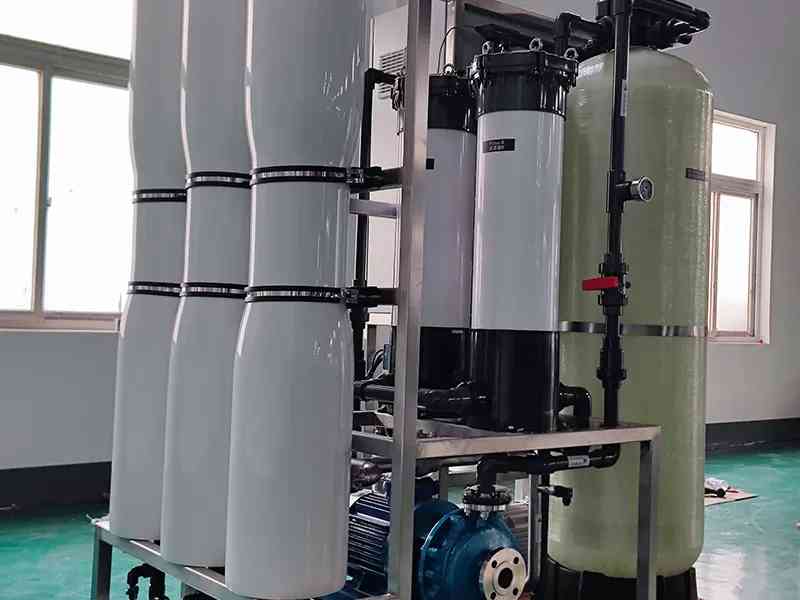
SHANGHAI, CHINA, September 18, 2026 /EINPresswire.com/ — Developing sustainable freshwater infrastructure across remote oceanic islands requires overcoming isolated supply chains, aggressive coastal corrosion, and limited on-site technical personnel. In technical conferences such as ISSD-WM, industry specialists frequently examine how Shanghai Tongjie deploys a containerized seawater desalination system to bypass complex island civil construction while delivering reliable potable water tailored to local marine conditions.
For island infrastructure planners, water security begins with diagnostic clarity. Rather than defaulting to generic equipment purchases, successful island installations evaluate raw water sources, seasonal salinity shifts, marine corrosion risks, and remote operations to build a durable decentralized utility.
Island Deployment Starts with the Water Source and Demand Profile
Island water supply planning requires a thorough initial diagnosis of available raw water resources before finalizing treatment technology. Water scarcity on an island does not automatically dictate direct open-ocean reverse osmosis; planners must evaluate whether the site offers coastal beach wells, brackish groundwater aquifers, or seasonal rainwater reserves.
Raw feedwater quality dictates system complexity and operating costs. Open-ocean seawater carries total dissolved solids (TDS) between 32,000 and 42,000 mg/L, requiring high-pressure reverse osmosis operating at 55 to 70 bar. Conversely, if coastal geological strata permit beach wells or infiltration galleries, the natural sand filtration pre-clarifies feedwater, substantially lowering silt density index (SDI15 < 3) and stabilizing water temperatures. Where subterranean brackish water (TDS 2,000 to 10,000 mg/L) exists inland, a brackish water reverse osmosis (BWRO) train can be deployed at lower operating pressure (15 to 25 bar), reducing specific energy consumption by more than 50% compared to full seawater desalination.
Concurrently, the demand profile must distinguish between potable drinking requirements, municipal domestic use, landscape irrigation, and construction tasks. Sizing the treatment train around segmented water duties prevents over-treating non-potable water, lowering both capital investment and ongoing energy expenditures on energy-constrained islands.
Define the SWRO Treatment Route Around Intake and Product-Water Requirements
When open-sea or nearshore seawater is the designated source, the treatment process must incorporate multi-barrier pretreatment to protect downstream reverse osmosis membranes from premature fouling. Island waters are frequently subject to seasonal red tides, algal blooms, suspended organic debris, and monsoonal turbidity spikes.
A resilient island pretreatment train incorporates multi-stage filtration:
Coagulation and Flocculation Dosing: In-line dosing destabilizes colloidal matter and organic foulants prior to mechanical filtration.
Dissolved Air Flotation (DAF) or Dual-Media Filtration: For open-sea intakes prone to algal blooms, DAF separates low-density organic matter; in standard coastal intakes, pressurized sand and anthracite media filters remove suspended particulate matter down to 10–20 microns.
Microfiltration or Ultrafiltration (UF) Polishing: Pressurized UF membrane modules create an absolute physical barrier, ensuring feedwater SDI15 consistently remains below 2.5 prior to the high-pressure pumps.
Security Cartridge Filtration: 5-micron melt-blown polypropylene filter housings safeguard high-pressure pumps and RO spiral-wound elements against particulate carryover during media backwash cycles.
Downstream of the RO membrane racks, product water treatment must be tailored to health standards. Single-pass SWRO permeate typically exhibits a TDS of 200 to 400 mg/L, which satisfies general domestic requirements. For municipal drinking water aligned with WHO guidelines, the permeate undergoes post-treatment, including calcite remineralization (re-hardening with calcium and magnesium ions), pH adjustment, and residual chlorination or ultraviolet (UV) disinfection to inhibit bacterial regrowth within island storage reservoirs.
Why Containerization Simplifies Island Logistics and Site Integration
Constructing traditional brick-and-mortar water treatment facilities on remote islands presents formidable logistical hurdles. Island locations rarely possess concrete batching plants, specialized structural steel fabricators, or certified high-pressure pipe welders. Shipping raw materials and specialized labor across open water causes severe project delays, freight cost inflation, and weather vulnerabilities.
Factory-integrated containerization eliminates the majority of on-island construction work. A fully containerized SWRO system arrives on a cargo barge or roll-on/roll-off (Ro-Ro) vessel with all core process equipment—intake boosting pumps, filtration skids, chemical dosing stations, high-pressure pump units, membrane pressure vessels, CIP cleaning assemblies, and central electrical distribution—pre-installed and pre-wired inside an ISO shipping container.
Site civil requirements are reduced to casting a level concrete foundation pad, installing raw water intake piping, running permeate delivery lines to existing storage tanks, and terminating main power cables. Projects that would otherwise require six to nine months of on-site fabrication can be brought into service within days of the container being craned onto its pad.
Design for Marine Exposure, Maintenance Access, and Remote Operation
Operating equipment directly on an oceanic island exposes machinery to continuous high-humidity, salt-laden atmospheres that rapidly corrode standard industrial equipment. Long-term reliability requires protective engineering matched to aggressive marine environments.
Container enclosures must feature heavy-duty corrosion protection, utilizing multi-coat marine epoxy systems achieving ISO 12944 C5-M marine durability ratings. Hydraulic piping inside the container is strictly segregated by pressure and metallurgy: low-pressure pre-treatment circuits utilize corrosion-proof Schedule 80 UPVC, CPVC, or fiberglass-reinforced plastic (FRP), while high-pressure seawater manifolds utilize duplex 2205 or super duplex 2507 stainless steel. Internal climate control through heavy-duty industrial dehumidifiers and air conditioning prevents condensation and salt-mist ingress onto electrical switchgear and PLC components.
Furthermore, remote islands frequently lack resident water-treatment engineers. Systems must be engineered for automated, low-touch operation. Shanghai Tongjie integrates programmable logic controllers (PLCs) featuring one-touch automated startup, automated low-pressure flushing upon shutdown, and comprehensive sensor arrays monitoring pressures, flows, and water conductivity in real time.
Integrated 4G/5G or satellite IoT communication gateways transmit live operating metrics to centralized cloud monitoring platforms. Off-island technical support specialists can review operating trends, detect gradual membrane scaling, diagnose alarm conditions, and advise local caretakers on preventative maintenance schedules. A structured onboard consumable inventory—including replacement cartridge filters, antiscalant chemicals, and standard O-ring seal kits—ensures uninterrupted water supply across monsoonal seasons when maritime resupply may be suspended.
Island Containerized Desalination FAQ
Successful island deployment depends on matching equipment specifications to local water sources, power infrastructure, and logistics constraints.
How Does Beach-Well Intake Compare to Open-Sea Intake on Islands?
Beach-well intakes draw seawater through coastal sand strata, utilizing the seabed as a natural multi-media filter that significantly lowers turbidity, eliminates algae, and reduces pretreatment chemical consumption compared to direct open-sea pipelines.
What Pretreatment Is Needed for Seasonal Algae or Red Tide?
For open intakes exposed to seasonal red tides, incorporating dissolved air flotation (DAF) or ultrafiltration (UF) upstream of the RO membranes prevents organic foulants from clogging reverse osmosis elements.
Can Island SWRO Systems Be Operated Unattended?
Yes. Modern containerized units feature automated PLC sequencing, automatic permeate flushing during idle periods, and cloud telemetry, allowing daily operation without resident chemical engineers.
How Are Containerized Systems Transported to Remote Islands?
Standard 20-foot and 40-foot containers utilize ISO corner castings, allowing transport via standard commercial cargo barges, landing craft, or Ro-Ro vessels and unloading via mobile cranes or truck winches.
What Site Civil Works Are Required on the Island?
Site civil preparations are limited to casting a level reinforced concrete slab capable of bearing container point loads, preparing raw water intake sumps, and connecting external power and distribution pipework.
Convert Island Site Data into a Deployment Configuration
Selecting an island water treatment package requires connecting raw water chemistry, daily consumption targets, local power characteristics, and logistics access into a coordinated engineering specification. Grounding the project in site-verified data ensures long-term operational viability.
Provide raw water test reports, island location coordinates, daily water demand, and power supply parameters to the Shanghai Tongjie island project engineers to receive a customized process flow diagram, container layout drawing, and lifecycle budget assessment.
Shanghai Tongjie Environmental Protection Technology Co., Lt
Shanghai Tongjie
email us here
Visit us on social media:
LinkedIn
Facebook
TikTok
X
Legal Disclaimer:
EIN Presswire provides this news content “as is” without warranty of any kind. We do not accept any responsibility or liability
for the accuracy, content, images, videos, licenses, completeness, legality, or reliability of the information contained in this
article. If you have any complaints or copyright issues related to this article, kindly contact the author above.

Media gallery